


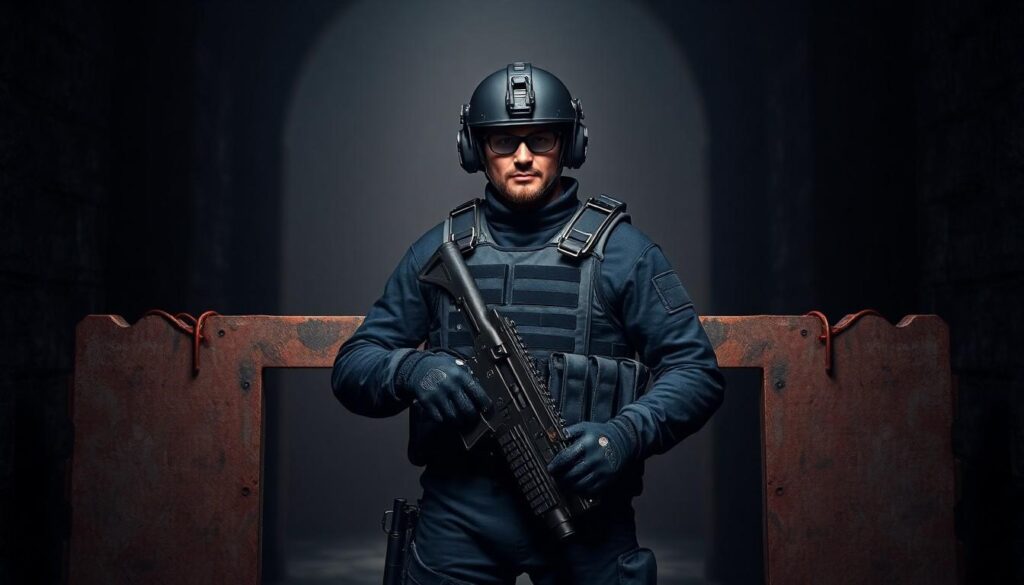
In the intense world of Rainbow Six Siege, operators come with their unique flair and skills, but few stand out quite like Castle. With his reinforced barricades, he’s not just a wall; he’s the ultimate party crasher for any would-be intruders. Imagine turning your cozy little corner of the map into a fortress that even the most determined attackers would think twice about breaching.
Castle’s ability to transform mundane doorways into impenetrable barriers is a game-changer. He’s the unsung hero of defense, making sure that every entry point feels like a VIP lounge, complete with bouncers ready to send unwanted guests packing. So, if you’re looking to elevate your gameplay and keep those pesky attackers at bay, it’s time to dive into the world of Castle and discover how he can help you reign supreme in Siege.
Overview of Castle in Rainbow Six Siege
Castle functions as a crucial defensive operator in Rainbow Six Siege, specializing in creating reinforced barricades known as Castle Barricades. These barricades provide enhanced protection by transforming critical entry points into fortified areas, effectively reducing the risk of breaches. Players utilizing Castle benefit from his unique gadgets, allowing for strategic control of the map.
His ability to deploy up to three reinforced barricades proves essential in various gameplay scenarios. Castle’s barricades withstand direct attacks from enemies, forcing attackers to use specific operators or gadgets to breach them. These barricades not only slow down opponents but also provide valuable time for the defending team to prepare for engagements.
In addition to his barricades, Castle’s simple yet effective utility enables teams to create kill zones where unsuspecting enemies can be eliminated. He excels in close-quarter combat scenarios, effectively countering rush strategies employed by attackers. Selecting Castle as an operator enhances defensive positioning and contributes to overall team synergy.
Players can maximize Castle’s effectiveness by placing barricades at choke points or high-traffic areas. Strategic placement disrupts attackers’ plans, confining their movements and creating opportunities for teammates to capitalize on enemy weaknesses. Understanding map layouts and common entry points allows players to make informed decisions while using Castle.
His overall presence on the battlefield is significant, necessitating coordinated team strategies to fully leverage his defensive capabilities. Utilizing Castle encourages a more structured defense while minimizing the risks associated with open access points. Embracing Castle’s role leads to stronger defensive strategies and improved gameplay success.
Castle’s Role and Utility

Castle excels as a defensive operator in Rainbow Six Siege, utilizing his unique gadgets to bolster team defenses. His ability to transform entry points into secure areas enhances overall tactical positioning significantly.
Strengths of Castle
Castle’s primary strength lies in his Castle Barricades. These reinforced barriers withstand initial bursts of gunfire, forcing attackers to expend valuable resources. Players can deploy up to three barricades, strategically blocking common entry points. Awareness of choke points further increases his effectiveness, allowing teams to create ambush opportunities. Close-quarter combat scenarios benefit the most, where attackers must navigate carefully. He effectively disrupts enemy plans and creates delay, providing defenders more time to prepare for engagements. These strengths make him a formidable presence on the battlefield, emphasizing the importance of teamwork in executing defensive strategies.
Weaknesses of Castle
Castle’s utility does come with inherent weaknesses. His ability does not directly damage enemies, limiting his offensive capabilities. Attackers equipped with breaching gadgets can render his barricades useless if not monitored closely. Failure to place barricades strategically can lead to wasted resources and increased vulnerability. Additionally, his reliance on teammates for securing flanks and managing barricade placements can create dependency. Map layouts play a crucial role; if attacked from unexpected angles, his defenses may become ineffective. Understanding these limitations is essential for players to maximize Castle’s potential in any match.
Loadout and Equipment
Castle’s effectiveness comes from his well-rounded loadout that supports his defensive role. Players leverage both primary and secondary weapons to establish a stronghold against attackers.
Primary Weapons
Castle has access to solid primary weapon choices. The M1014 shotgun delivers high damage at close range, making it ideal for tight spaces within reinforced areas. Alternatively, the UMP45 submachine gun offers decent fire rate and accuracy, allowing for sustained fire against foes. Both weapons excel in different scenarios. The shotgun can secure instant eliminations, while the submachine gun provides versatility for medium-range engagements. This combination helps Castle adapt to various threats.
Secondary Weapons
Castle’s secondary weapons further enhance his defensive strategy. The M1911 pistol features a powerful single shot, perfect for precise engagements when primary ammunition runs low. The SPAS-15 shotgun serves as a powerful backup option. Both firearms emphasize effectiveness in close-quarters combat. Utilizing these weapons ensures Castle maintains a fighting chance, even when defenders face unexpected encounters. Balancing the primary and secondary loadout contributes to a robust defensive posture for his team.
Strategies for Playing as Castle
Castle serves as a pivotal defensive operator in Rainbow Six Siege. His ability to deploy reinforced barricades allows teams to control critical areas effectively.
Defensive Strategies
Positioning Castle Barricades near entry points creates formidable obstacles for attackers. Deploying barricades at choke points forces adversaries to approach with caution, increasing the potential for ambushes. Utilizing Castle’s gadgets in conjunction with environmental features amplifies their effectiveness. Focusing on high-traffic areas enhances their ability to gather intel while slowing enemy advances. Players can also place barricades to funnel attackers into kill zones, maximizing defensive firepower.
Team Coordination
Successful defense requires seamless communication among teammates. Coordinating with support operators ensures Castle’s much-needed coverage from flanks. Sharing information about barricade placements allows for quicker enemy assessments. Teammates equipped with roamers can assist in keeping Castle’s areas secure. They can apply pressure on attackers, distracting them from breaching efforts. Additionally, informing teammates about ongoing threats supports collective engagements, increasing survival chances.
Map-Specific Tips for Castle
Castle’s effectiveness hinges on his barricade placements across various maps. Use Castle Barricades at key entry points to maximize their impact. Positioning these barricades near high-traffic areas can force attackers to either waste explosives or take longer to breach, allowing the defending team critical time to prepare.
Utilize map knowledge to identify optimal locations for deploying barricades. It’s crucial to select spots that restrict sightlines and funnel attackers into kill zones. Areas like stairwells or tight hallways can become choke points, enabling defenders to take advantage of ambush tactics.
Combining Castle with operators who provide supporting utility boosts overall defense. Operators such as Mute or Bandit can help secure barricades, making it harder for attackers to disable them. This combination allows Castle to focus on covering angles and outsmarting enemies rather than solely monitoring his barricades.
Understand specific map dynamics that enhance Castle’s strengths. In vertical maps, placing barricades to control staircases or hatches can slow down enemy advances significantly. Attackers often face difficulty when navigating around barricades in these scenarios, providing defenders with opportunities for surprise engagements.
Coordinate with teammates for efficient defense. Communication regarding barricade placements and monitoring active entry points can prevent attackers from exploiting Castle’s weaknesses. Sharing callouts about incoming threats, especially during critical moments, ensures that Castle can effectively deter breaches.
Remember to maintain awareness of attacker operators who can negate Castle’s utility. Characters like Thermite or Hibana can quickly dismantle fortified positions if left unchecked. By remaining alert and ready to assist teammates, Castle can uphold his crucial role in the team’s defensive strategy.
Conclusion
Castle stands out as a pivotal defensive operator in Rainbow Six Siege. His ability to deploy Castle Barricades not only fortifies entry points but also shapes the flow of the match. By forcing attackers to reconsider their approach, he creates opportunities for his team to capitalize on mistakes.
While Castle’s strengths are evident, players must remain aware of his limitations. Effective communication and strategic placement of barricades are essential for maximizing his impact. When utilized correctly, Castle can significantly alter the dynamics of a round, making him an invaluable asset in any defensive strategy. Emphasizing teamwork and map awareness will ensure that Castle remains a formidable presence on the battlefield.